Mission
The goal of the Diindolylmethane Information Resource Center is to provide an accurate scientific summary of Diindolylmethane (DIM) for consumers and biomedical investigators. It is a collaborative initiative of faculty members and research fellows at the University of California at Berkeley.
About DIM
Diindolylmethane (DIM) is a naturally occurring compound found in Brassica vegetables such as broccoli, cabbage, Brussels sprouts, cauliflower and kale. DIM is currently under investigation as a naturally occurring compound for the prevention and treatment of cancer, infectious diseases (including Covid-19) and immune deficiency conditions due to its potent anti-cancer, immune modulating and anti-inflammatory properties. The compound is formed during the autolytic breakdown of glucobrassicin present in Brassica vegetables. The autolytic breakdown of glucobrassicin requires the catalytic reaction of the enzyme myrosinase which is endogenous to these plants and released upon the breaking of the cell wall of the plant.
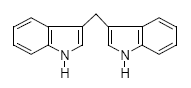
Diindolylmethane Molecular Weight, Crystalline Characteristics & Molecular Structure
Diindolylmethane has a molecular weight of 246 and is pale yellow in crystalline form. The purified compound does not have any taste.
3,3’-Diindolylmethane
Solubility and Bioavailability
Diindolylmethane is a lipophilic oil-soluble compound. Similar to other oil-soluble phytochemicals, such as lycopene and lutein, the presence of vegetable oil and other lipophilic compounds, such as phosphatidylcholine, that aid in the formation of absorption micelles within the gastrointestinal tract, greatly increase the bioavailability of DIM upon oral administration. Most of the preclinical animal studies and some of the human clinical trials conducted with DIM have consisted of DIM co-administered with vegetable oils. Some of the formulations have additionally contained phosphatidylcholine and other lipophilic excipients for enhanced absorption. When formulated correctly, Diindolylmethane is a highly bioavailable compound.
DIM Supplement Consumer Advisory
If you come across DIM supplement formulations that have BioPerine (Piper Nigrum) or Black Pepper Extract in them or Vitamin E listed in the complex that contains the DIM, such as the synthetic form of Vitamin E known as Tocophersolan, we do not recommend that you consume these products without first consulting with your healthcare professional. The reason is that the safety of BioPerine co-administered with a DIM supplement has not been established in well-documented and well-designed toxicity studies yet and the addition of such a compound to aid in the bioavailability of the DIM supplement is ill-advised, although commonly done by DIM supplement vendors on the internet. On the other hand, the presence of excessive Vitamin E in complexes that contain the DIM supplement can counteract some of the beneficial biological properties of this compound. This is another technique that is often employed by DIM supplement vendors to try to enhance the bioavailability of Diindolylmethane which is ill-advised. Even though some minor improvements may be made in the absorption of DIM, excessive Vitamin E in such DIM supplement formulations counteracts important biological activities of this compound and would interfere with its health benefits when taken as a dietary supplement.
News Brief From Berkeley
A Bioavailable Diindolylmethane Immune Support Formula has been launched with technology exclusively licensed from UC Berkeley as a fund-raiser for nature-based cancer therapeutics research. For more information about this formula, please visit: www.BerkeleyFormula.com.